
 Free & Fast Shipping
 30-Day Easy Returns
 2-Year Quality Guarantee
 Lifetime Technical Support
A standards-based Arm mini workstation designed for easier Linux deployment, AI workloads, and Arm-native development
Quick Answer
MINISFORUM, a global edge computing solution brand & system integrator, has announced that its Arm ®-based AI mini workstation, the MS-R1, has officially achieved Arm SystemReady™ band and PC-BSA v1.0 compliance.
Arm SystemReady is Arm’s official compliance and standardization program designed to address longstanding software fragmentation across the Arm ecosystem. This milestone not only demonstrates MS-R1’s adherence to Arm platform standards, but also signals a broader industry shift toward a “plug-and-play” experience. As Arm platforms become more standardized, users can expect greater operating system compatibility, simplified software deployment, and improved long-term maintainability.
Compared with traditional development boards, the MS-R1 supports a UEFI-based boot flow, ACPI-based hardware descriptions, dual 10GbE networking, PCIe expansion, and mainstream Linux deployment workflows. It is designed for local AI inference, Linux-on-Arm development, edge AI applications, and enterprise Arm workstation evaluation.

Why This Matters
Arm-based computing is expanding rapidly across AI PCs, edge computing, developer workstations, and enterprise infrastructure.
The MS-R1's achievement of Arm SystemReady Band and PC-BSA v1.0 compliance is an important step toward a more standardized Arm workstation experience. It helps reduce software fragmentation and supports a more predictable foundation for developers, enterprises, and teams building on Arm.
What Arm SystemReady Means for MS-R1
Arm SystemReady is Arm's compliance and standardization program for Arm-based platforms. For users, developers, and IT teams, the value is not only the compliance itself, but the more consistent software experience it enables.
For SystemReady Band platforms, the focus is on ACPI-based environments where generic operating systems can be installed and used with less platform-specific customization. PC-BSA v1.0 further defines a common set of hardware requirements for Arm-based PCs, helping improve operating system compatibility and consistent software behavior across different platforms.
For the MS-R1, this means a more PC-like Arm platform foundation for Linux deployment, software validation, and long-term maintainability.
A More PC-Like Arm Workstation Experience
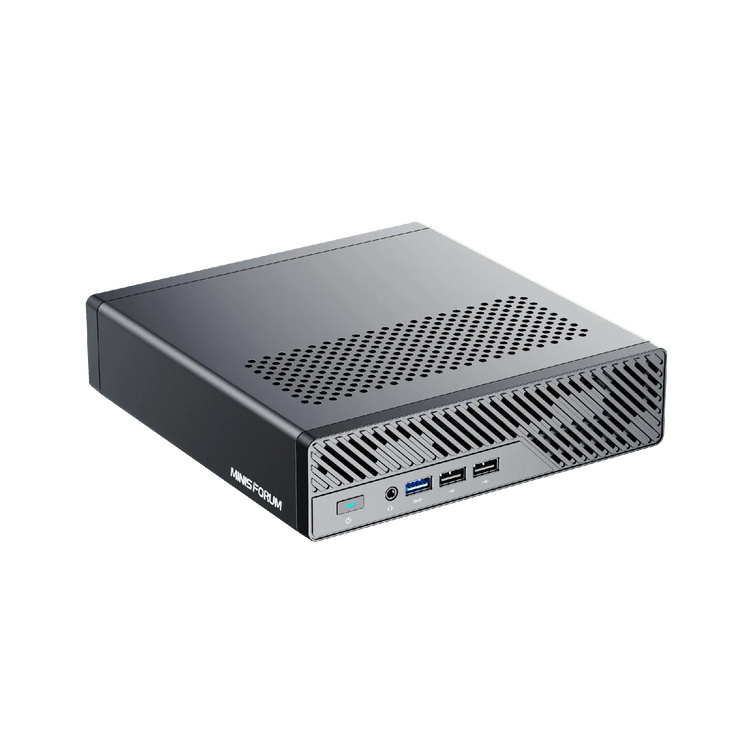
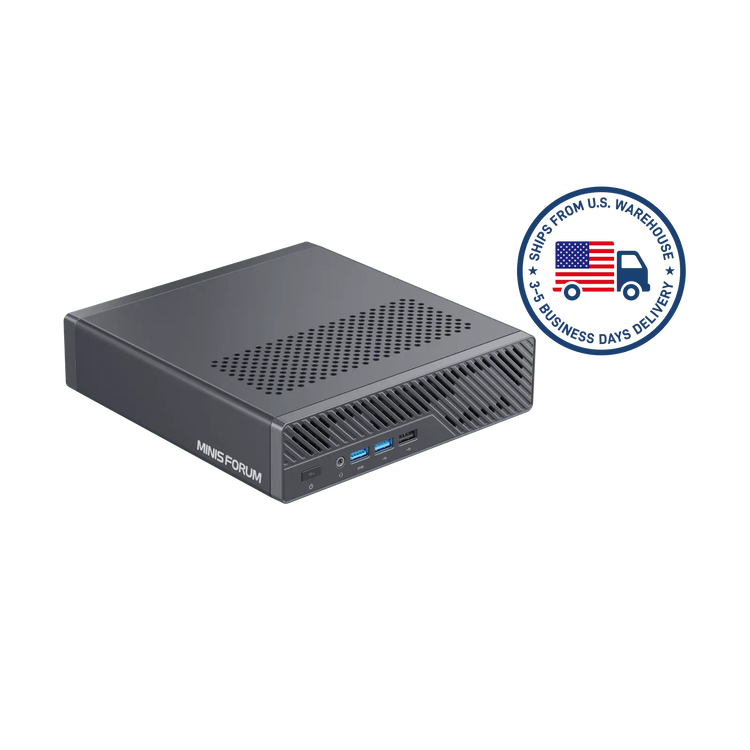
The MS-R1 is MINISFORUM's next-generation Arm-based mini workstation, designed for high-performance computing, local AI workloads, enterprise applications, and Arm-native development.
Unlike traditional development boards that often rely on customized bootloaders and Devicetree configurations, the MS-R1 adopts a more PC-like platform architecture. It supports UEFI boot, ACPI-based hardware descriptions, and mainstream Linux deployment workflows.
This makes the MS-R1 well suited for developers and organizations looking for an Arm-based workstation that is easier to install, easier to validate, and easier to maintain over time.
MS-R1 vs. Traditional Development Boards
The MS-R1 is designed to provide a more standardized and workstation-oriented Arm computing experience than typical development boards.

Boot flow
Often relies on customized bootloaders
Supports UEFI-based boot flow
Hardware description
Commonly uses Devicetree configurations
Supports ACPI-based hardware descriptions
OS deployment
May require vendor-specific images or adaptations
Designed for broader Linux deployment workflows
Expansion
Usually limited expansion options
PCIe x16 slot with PCIe 4.0 x8 electrical connectivity
Networking
Often 1GbE or limited networking
Dual 10GbE RJ45 ports
Target users
Developers and hardware evaluation teams
AI developers, Linux-on-Arm teams, enterprise labs, and edge AI users
This makes the MS-R1 more than a development board. It is a compact Arm-based workstation platform designed for real-world software development, AI workloads, and enterprise evaluation.
Powered by the CIX P1 Platform
The MS-R1 is powered by the CIX P1, a next-generation Armv9-based SoC designed for high-performance PCs, AI workstations, and intelligent edge computing platforms. Built on an advanced 6 nm manufacturing process, the CIX P1 delivers a balance of performance and power efficiency for compact workstation-class systems.

The platform integrates a 12-core CPU with a 10-core Arm Immortalis™-G720 GPU and integrated AI acceleration. Together with up to 64GB of high-speed shared memory, the MS-R1 provides the bandwidth and low-latency access required for local AI inference, multimodal workloads, and Arm-native development.
Key hardware highlights include:
- CP8180 processor with 12 cores and 12 threads
- Up to 45 TOPS of AI performance
- Arm Immortalis™ G720 MC10 integrated GPU
- Up to 64GB LPDDR5 memory with ECC support
- Dual 10GbE RJ45 networking
- PCIe x16 slot with PCIe 4.0 x8 electrical connectivity
- M.2 PCIe 4.0 NVMe storage support
- Wi-Fi 6E and Bluetooth® 5.3
- HDMI™ and USB-C DisplayPort output
- Compact 1.7L form factor

With this combination of Arm efficiency, high-speed networking, PCIe expansion, and AI acceleration, the MS-R1 is built for more than everyday computing. It is designed as a compact workstation platform for developers, labs, and professional users exploring the next generation of Arm-based computing.
Ubuntu 26.04 Concept Availability for CIX P1
Canonical has introduced an Ubuntu 26.04 Concept image for CIX P1-based platforms, including the MS-R1 as one of the tested platforms.
This provides developers with an early opportunity to evaluate Ubuntu on CIX P1 hardware using a more standardized installation workflow. Compared with traditional Arm deployment methods, this direction reflects the industry's shift toward ACPI-based boot flows, UEFI support, and more universal Linux installation experiences.
Please note that Ubuntu Concept images are intended for developer evaluation and early platform testing. They are not positioned as production-ready images.
Built for AI, Development, and Edge Workloads

With its Arm-based architecture, integrated AI acceleration, dual 10GbE networking, and PCIe expansion, the MS-R1 is suitable for a wide range of advanced computing scenarios, including:
- Local AI inference
- Edge AI gateways
- Multimodal AI workloads
- Arm-native software development
- Linux-on-Arm validation and testing
- Containerized deployments
- CI/CD infrastructure nodes
- Enterprise workstation environments
- AI PC evaluation and prototyping
The MS-R1 gives developers and organizations a compact, efficient, and standards-based Arm platform for exploring real-world AI and workstation workloads.
Advancing Standards-Based Arm Computing
The MS-R1's achievement of Arm SystemReady Band and PC-BSA v1.0 compliance represents more than a product milestone. It reflects a broader industry transition toward standardized, general-purpose, and PC-oriented Arm computing platforms.
As technologies such as UEFI, ACPI, and universal Linux distribution support continue to mature, Arm-based systems are moving beyond development-board ecosystems into more capable desktop, workstation, and edge computing environments.
The MS-R1 is an important step in that evolution. By combining standards-based platform design with compact workstation hardware, it helps accelerate the adoption of Arm across AI, development, and professional computing workloads.
Ecosystem Perspectives from Arm and CIX
The MS-R1's Arm SystemReady Band and PC-BSA v1.0 compliance has also been recognized by key ecosystem partners. For Arm-based PCs and workstations, industry standards are becoming increasingly important as the ecosystem moves toward broader operating system compatibility, software portability, and more consistent platform behavior.
Arm on Platform Standardization
“As Arm-based PCs and workstations continue to gain momentum, industry standards play an important role in enabling software portability, operating system compatibility and platform consistency,” said Dong Wei, Lead Standards Architect and Fellow at Arm. “By achieving both Arm SystemReady Band and PC-BSA compliance, the MS-R1 demonstrates how standards-based platforms can deliver a more seamless out-of-the-box experience for developers, enterprises, and end users. This milestone helps accelerate the adoption of Arm-based PCs and workstations across a growing range of AI and computing workloads.”
For CIX, the MS-R1 also demonstrates the potential of the CIX P1 platform as a foundation for high-performance, standards-based Arm computing.
CIX on Hardware-Software Synergy
“The MS-R1's achievement of Arm SystemReady Band compliance is a powerful validation of the deep hardware-software synergy between CIX and MINISFORUM. Delivering this level of universal compatibility on a high-performance platform powered by our CIX P1 processor showcases the immense potential of a true out-of-the-box Arm-based ecosystem. We are excited to continue collaborating with MINISFORUM and our broader ecosystem partners to drive ecosystem collaboration and bring next-generation, efficient computing to agentic compute platforms.”
— Danny Zhang, Chief Marketing Officer, CIX Technology
FAQ
-
What is the MINISFORUM MS-R1?
The MINISFORUM MS-R1 is an Arm-based AI mini workstation powered by the CIX P1 platform. It is designed for local AI inference, Arm-native software development, Linux-on-Arm testing, edge AI workloads, and enterprise workstation evaluation.
-
Is the MS-R1 Arm SystemReady compliant?
Yes. The MS-R1 has achieved Arm SystemReady Band and PC-BSA v1.0 compliance. This means the platform follows Arm's standardized requirements for a more consistent software and operating system experience.
-
What does Arm SystemReady mean for users?
Arm SystemReady helps reduce software fragmentation across Arm platforms. For users and developers, this can mean more standardized boot behavior, better operating system compatibility, and a more PC-like deployment experience.
-
How is the MS-R1 different from a typical development board?
Unlike many traditional development boards, the MS-R1 supports UEFI boot, ACPI-based hardware descriptions, dual 10GbE networking, PCIe expansion, and mainstream Linux deployment workflows. It is designed as a compact workstation platform rather than only a hardware evaluation board.
-
Does the MS-R1 support Ubuntu?
Canonical has introduced an Ubuntu 26.04 Concept image for CIX P1-based platforms, including the MS-R1 as one of the tested platforms. This image is intended for developer evaluation and early testing, not production deployment.
-
Who is the MS-R1 designed for?
The MS-R1 is designed for AI developers, Linux-on-Arm developers, enterprise labs, edge AI teams, CI/CD infrastructure teams, and organizations evaluating next-generation Arm-based AI PCs or compact workstations.
Explore the MINISFORUM MS-R1
The MINISFORUM MS-R1 is designed for developers, enterprises, AI innovators, and Arm ecosystem builders who need a compact, expandable, and standards-based workstation platform.

0 comentarios
SUBMIT COMMENT