
 Free & Fast Shipping
 30-Day Easy Returns
 2-Year Quality Guarantee
 Lifetime Technical Support
 MINISFORUM
 MINISFORUM
Quick Answer
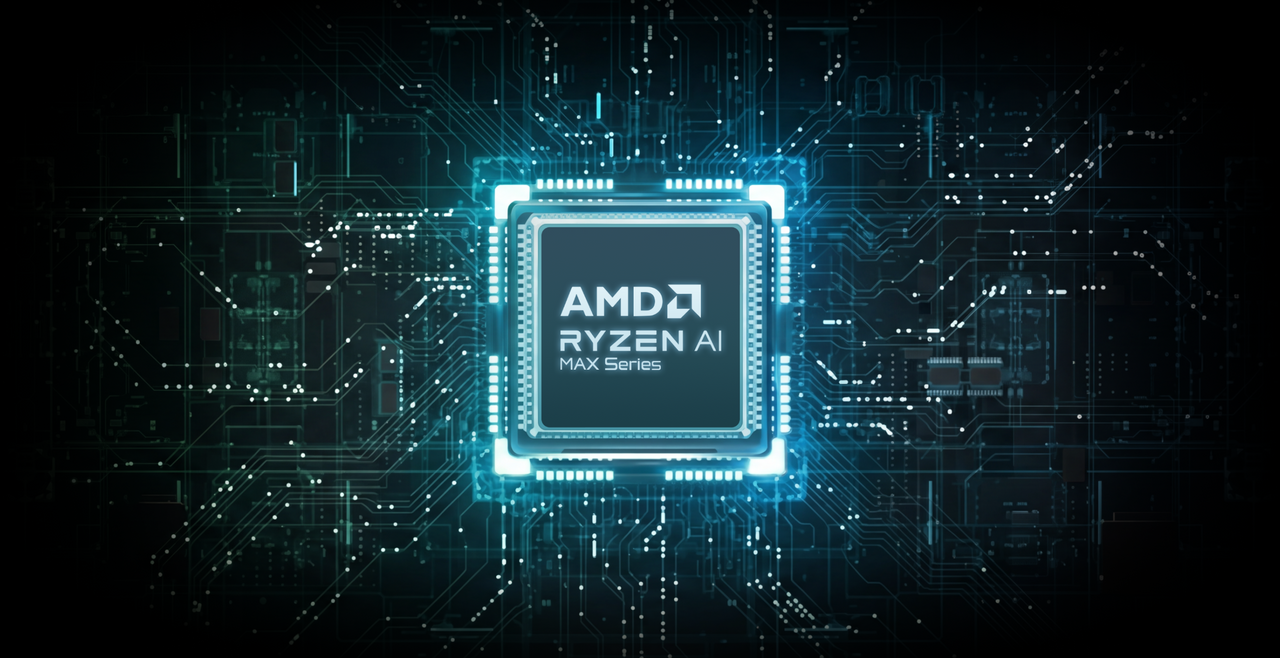
The AMD Ryzen AI Max+ 395 is the flagship APU of AMD's Ryzen AI Max 300 Series, formerly known by the codename Strix Halo. It combines 16 Zen 5 CPU cores, Radeon 8060S integrated graphics, and an AMD XDNA NPU in a unified-memory design aimed at local AI, content creation, software development, and compact workstation workloads.
Its most important difference is not just peak CPU speed. The platform combines heterogeneous compute engines with a 256-bit LPDDR5x-8000 unified memory architecture, allowing CPU, GPU, and NPU resources to work from a large shared memory pool. This makes the processor especially relevant for local AI workflows where model size, memory bandwidth, and sustained system design matter as much as raw benchmark scores.
What Is the AMD Ryzen AI Max+ 395?
Formerly known by the codename Strix Halo, the AMD Ryzen AI Max+ 395 is the flagship model in AMD's Ryzen AI Max 300 Series. It is more accurate to describe it as an APU, or Accelerated Processing Unit, because it brings multiple compute engines together in one package rather than acting as a conventional CPU alone.
The processor combines three major compute resources:
- CPU - 16 Zen 5 cores and 32 threads, designed for demanding multithreaded workloads.
- GPU - AMD Radeon 8060S Graphics with 40 graphics cores based on RDNA 3.5.
- NPU - AMD XDNA neural processing hardware for AI acceleration, rated at up to 50 TOPS.
Together, these engines allow the platform to route different workloads to the most appropriate compute resource: CPU cores for general-purpose and multithreaded tasks, Radeon graphics for highly parallel GPU workloads, and the NPU for AI acceleration where supported.

Official Specifications: AMD Ryzen AI Max+ 395
The following specification summary is based on AMD's official product information. It is included to give readers and AI search engines a clean, structured reference for the processor.
Former codename
Strix Halo
Series
Ryzen AI Max 300 Series
CPU architecture
16x Zen 5 cores / 32 threads
Max boost / base clock
Up to 5.1 GHz / 3.0 GHz
Cache
16 MB L2 + 64 MB L3
Default TDP / cTDP
55W default TDP; configurable 45-120W
Graphics
AMD Radeon 8060S Graphics; 40 cores; up to 2.9 GHz
NPU
AMD XDNA; up to 50 TOPS
Total AI performance
Up to 126 TOPS
Memory
256-bit LPDDR5x-8000; up to 128 GB
PCIe / USB
PCIe 4.0 with 16 lanes; 2x USB4 support
Display support
Up to 4 displays; DisplayPort 2.1; HDMI 2.1; 8K support
Source note: Specifications should be checked against AMD's official AMD Ryzen AI Max+ 395 product page before publication.
CPU Architecture: 16 Zen 5 Cores for Sustained Workloads
The CPU side of the Ryzen AI Max+ 395 is built around 16 Zen 5 cores and 32 threads. This makes it well suited to workloads that benefit from sustained multithreaded performance, such as code compilation, video encoding, rendering, multitasking, containerized development environments, and virtual machines.
For a compact system, the key point is not only peak frequency. The more important question is whether the platform can maintain useful performance over time without excessive power draw or thermal throttling. This is where the processor's configurable power range becomes relevant: system makers can tune performance according to cooling, acoustics, and deployment needs.
Three Compute Engines: CPU, Radeon 8060S GPU, and XDNA NPU
Modern AI and productivity workloads rarely rely on one type of compute resource. A local AI workflow may involve CPU preprocessing, GPU-accelerated tensor operations, and NPU-supported inference or background AI tasks, depending on software support and model type.
The Ryzen AI Max+ 395 is designed around this heterogeneous model. Instead of treating AI as a single accelerator number, it combines CPU, integrated GPU, and NPU resources so that different tasks can be handled by the engine best suited to them.
Radeon 8060S Graphics: Why the Integrated GPU Matters
The Radeon 8060S is not a basic display engine. With 40 graphics cores based on RDNA 3.5, it gives the Ryzen AI Max+ 395 a much stronger integrated graphics foundation than conventional mobile processors. This matters for GPU-accelerated content creation, image processing, local AI tools, and lightweight workstation graphics workloads.
It should not be described as a universal replacement for every discrete GPU scenario. A high-end discrete GPU still has advantages in raw graphics throughput, dedicated VRAM, and mature acceleration stacks. However, the Radeon 8060S significantly changes what an integrated GPU can do in a compact system, especially when paired with a large unified memory pool.

Unified Memory: Why It Matters for Local AI
The most important architectural advantage of the Ryzen AI Max+ 395 for local AI is its unified memory design. The platform supports up to 128 GB of LPDDR5x-8000 memory over a 256-bit interface, giving CPU, GPU, and NPU resources access to a large shared memory pool.
For local large language models and generative AI workflows, memory capacity can be just as important as compute speed. Many discrete GPUs are limited by 8 GB, 12 GB, or 16 GB of dedicated VRAM. In contrast, a unified-memory system built around Ryzen AI Max+ 395 may allow a much larger portion of system memory to be allocated for graphics or AI workloads, depending on firmware and system configuration.
This does not automatically guarantee faster inference in every scenario. Instead, it improves flexibility: users may be able to load larger quantized models, experiment with bigger context windows, or run workloads that would not fit comfortably within a smaller discrete GPU memory limit.

Efficiency and cTDP: Why System Design Still Matters
The Ryzen AI Max+ 395 is designed for a configurable power range rather than a single fixed performance profile. This makes it flexible, but it also means that two systems using the same processor can behave very differently.
A compact AI workstation or mini PC must balance several factors: cooling capacity, fan noise, sustained wattage, power supply headroom, chassis airflow, memory allocation settings, and I/O design. The processor provides the foundation, but the system determines how much of that potential can be used continuously.
What Workloads Is the Ryzen AI Max+ 395 Best For?
The Ryzen AI Max+ 395 is strongest when its CPU, GPU, NPU, and unified memory can work together across mixed workloads. It is especially relevant for:
- Local AI inference and model experimentation
- Content creation, video editing, and GPU-accelerated creative tools
- Software development, code compilation, and containerized workloads
- Virtual machines and multi-service local development environments
- Compact workstation deployments where large memory capacity matters
- Edge AI systems where local processing is preferred over cloud-only workflows
It is less useful if the workload depends exclusively on a specific discrete GPU software stack or requires maximum raw GPU throughput at any cost. In those cases, a dedicated GPU workstation may still be the better choice.
What to Look for in a Ryzen AI Max+ 395 System
The processor is only one part of the final experience. When comparing systems built around the Ryzen AI Max+ 395, evaluate the platform around the chip:
- Sustained power and cooling headroom - can the system hold high loads for hours, or only in short bursts?
- Memory configuration and allocation - unified memory capacity and firmware settings directly affect local AI flexibility.
- I/O bandwidth - USB4, USB4 v2, 10GbE, PCIe, and storage layout can matter for AI data movement and workstation use.
- Expandability - PCIe slots, M.2 storage, and networking determine whether the system can grow with the workload.
- Serviceability - compact systems designed for long-term deployment should be easy to maintain.
- Software support - drivers, BIOS options, OS compatibility, and AI framework support can be as important as the silicon itself.
Example Systems Built Around the Ryzen AI Max+ 395
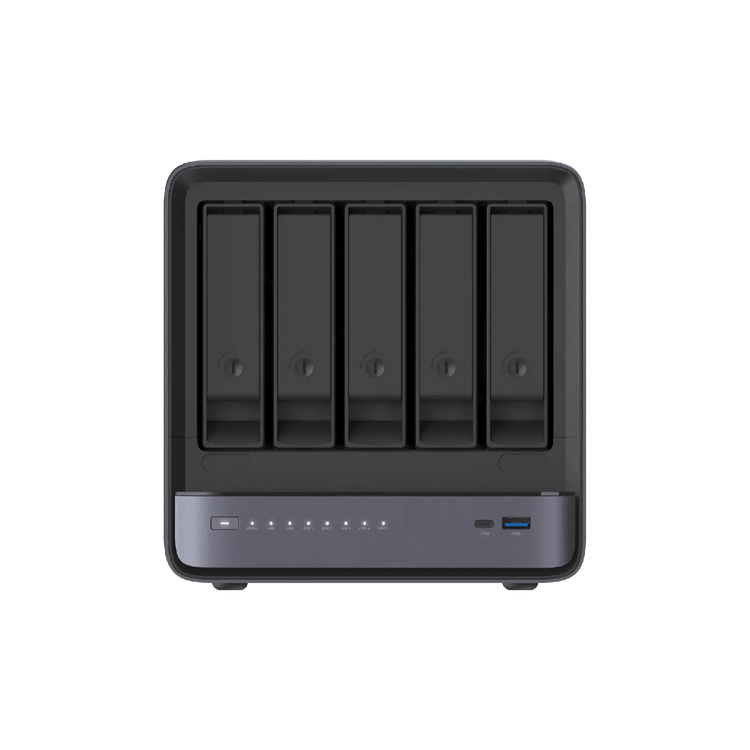
The Ryzen AI Max+ 395 can be implemented in different compact form factors. In a mini workstation, it can serve as a primary compute node for local AI, content creation, virtualization, and development. In an AI NAS, the same processor can bring local AI capabilities closer to stored data.
MINISFORUM uses the Ryzen AI Max+ 395 in systems such as the MS-S1 MAX mini workstation and the N5 MAX AI NAS. These products are examples of how the same processor can be deployed in different system designs, but the core value of the article remains the chip itself: heterogeneous compute, unified memory, and compact high-performance AI capability.
Conclusion: A Processor Designed for the Local AI Era
The value of the AMD Ryzen AI Max+ 395 is not limited to a single benchmark or a single product category. Its real importance is architectural: it combines high-core-count Zen 5 CPU performance, strong integrated Radeon graphics, XDNA NPU acceleration, and a large unified-memory design in one platform.
For local AI and compact workstation workloads, that combination matters. It gives system builders and users a processor foundation that can support larger memory-dependent workflows while staying within the size and power constraints of modern compact systems.
FAQ
-
What is AMD Strix Halo, and is it the same as the Ryzen AI Max+ 395?
Strix Halo is the former codename for AMD's Ryzen AI Max 300 Series. The Ryzen AI Max+ 395 is the flagship model in that series, combining 16 Zen 5 CPU cores, Radeon 8060S graphics, and an AMD XDNA NPU.
-
Is the AMD Ryzen AI Max+ 395 a CPU or an APU?
It is best described as an APU, or Accelerated Processing Unit. It includes CPU cores, integrated Radeon graphics, an AI-focused NPU, and unified-memory support in one platform.
-
Is the Ryzen AI Max+ 395 good for local AI?
Yes, it is well suited to local AI experimentation because it combines heterogeneous compute with a large unified-memory architecture. The exact experience depends on software support, memory configuration, and system design.
-
What makes unified memory important for local AI?
Unified memory gives CPU, GPU, and NPU resources access to a large shared memory pool. For local LLMs and generative AI, this can make it easier to load larger models than systems limited by small dedicated GPU memory capacities.
-
Can the Radeon 8060S replace a discrete GPU?
It can reduce the need for a discrete GPU in many compact workstation and local AI scenarios, but it does not replace every high-end GPU use case. Workloads that require maximum discrete GPU performance or specific GPU acceleration stacks may still benefit from a dedicated GPU.
-
What system features matter most for a Ryzen AI Max+ 395 device?
Cooling, sustained power limits, memory capacity, firmware memory allocation, I/O bandwidth, storage layout, and software support all influence real-world results.
-
Which MINISFORUM products use the AMD Ryzen AI Max+ 395?
MINISFORUM uses the Ryzen AI Max+ 395 in systems such as the MS-S1 MAX mini workstation and the N5 MAX AI NAS. They are examples of different form factors built around the same processor.
-
MINISFORUM MS-S1 MAX 128GB Max AI Compute Edition 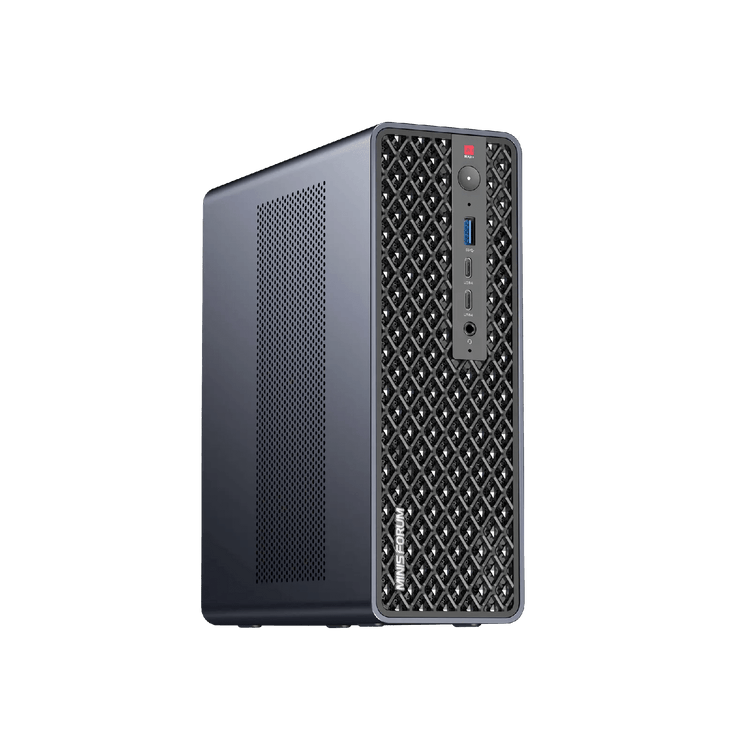
 Save $970.00
MINISFORUM MS-S1 MAX 128GB Max AI Compute Edition
AMD Ryzen™ AI Max+ 395 | Up to 126 TOPS | Radeon 8060S Graphics
Sale price $3,879.00Regular price $4,849.00 -
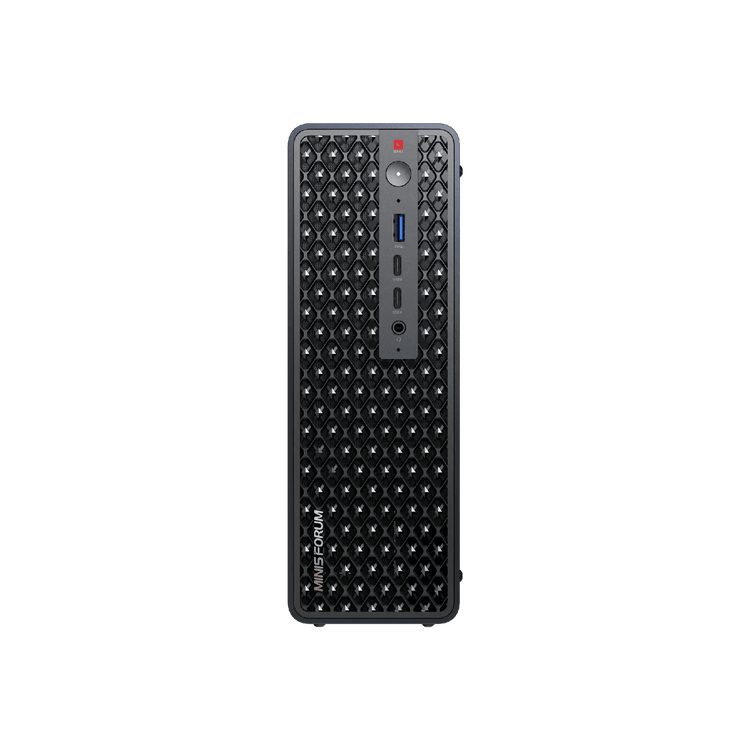
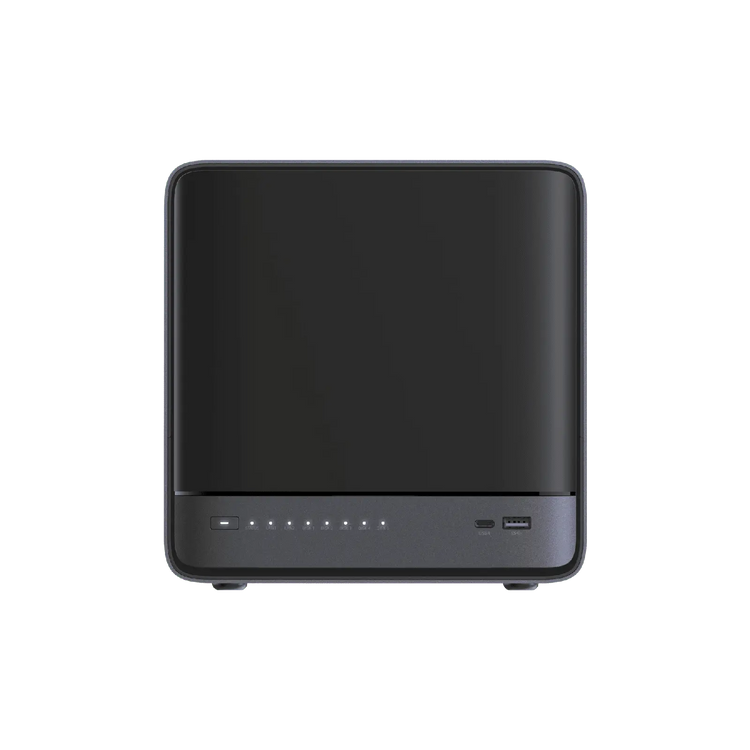
MINISFORUM N5 MAX AI NAS

0 comments
SUBMIT COMMENT